The React Native Bridge is gone
For years, the “bridge” architecture in React Native was a hot topic. Every article, tutorial, and conference talk seemed to mention it. But with the new React Native architecture, the bridge is officially gone. It’s time to move on! If someone complains about the React Native bridge in 2025+ then there’s a good chance they haven’t caught up with latest RN development trends or they are just using LLM generated content (AI training data is still biased towards older content)
What Changed?
- Old Architecture: React Native used a bridge to communicate between JavaScript and native code, which introduced performance bottlenecks and complexity.
- New Architecture: The new system (Fabric & TurboModules) enables direct, synchronous communication and improved performance. The bridge is no longer a bottleneck.
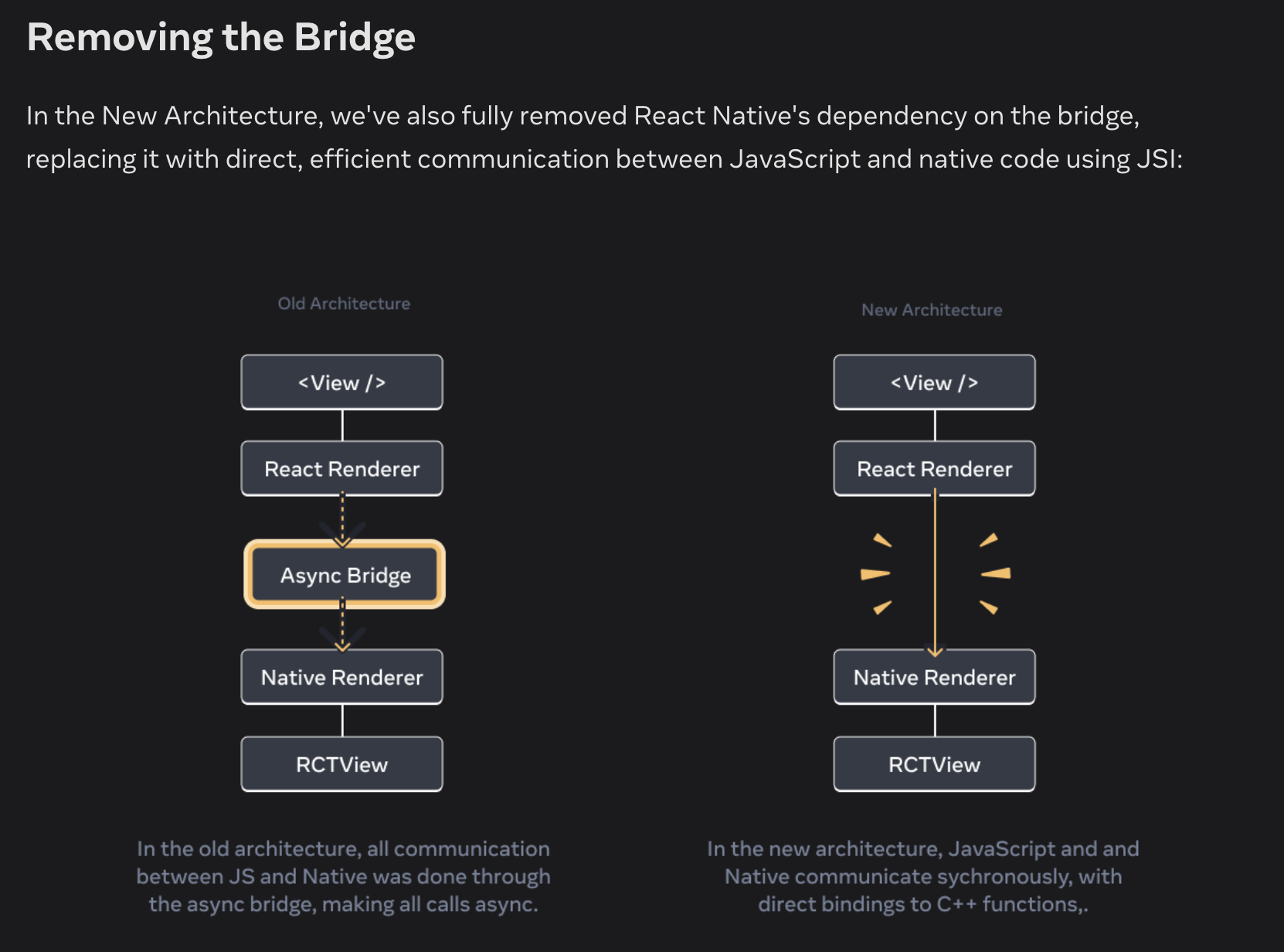 If you haven’t already then check out the offical blog post from 2024
Why Does This Matter?
- Better Performance: UI updates and native calls are faster and smoother.
- Simpler Mental Model: Developers don’t need to worry about async bridge calls or serialization.
- Modern APIs: New features and libraries are built for the new architecture, not the bridge.
Stop Writing About the Bridge!
If you’re writing about React Native in 2025, focus on the new architecture. The bridge is legacy. Tutorials, docs, and blog posts should help developers adopt the latest best practices.
What to Write About Instead
- How to migrate to the new architecture
- Using Fabric and TurboModules
- Performance improvements and new APIs
React Native has evolved. Let’s help the community move forward by leaving the bridge in the past.
Thoughts on the new React Native architecture? Reach out to me on LinkedIn to discuss!